Planning permission granted for Leven train station as part of £116m project

Planning permission granted for Leven train station as part of £116m project

Gabriel McKay

Gabriel McKay

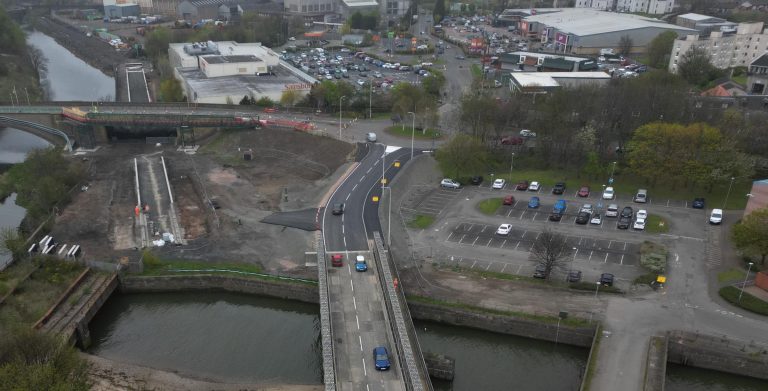
Leven in Fife is set to get its own train station after planning permission was granted for construction.

The Scottish Government is funding a £116m project to link the town to the main rail network for the first time in over five decades.

The project is planned to be completed by the spring of 2024, and planning permission has now been secured for one of two new stations.

Leven station will boast 205m island platforms and a pebble styled pavilion area as the entrance to the new station.

Another new station at Cameron Bridge is also included in the project.

Located next to Leven leisure centre, the station will have easy access to connecting bus services and all existing active travel routes.

Read More: Warning of threat to Irn-Bru supplies as drivers walk out

It will have 133 car parking spaces with provision for EV charging and cycle storage and there will be ‘blue badge’ accessible parking spaces.

Joe Mulvenna, programme manager for Network Rail said: “Securing planning permission for Leven station is another step in the right direction for the project. It takes us closer to getting the full station development built and opened for public use.

“While there are conditions attached to the planning consent, these come as no surprise to us, and we are busy working through these with Fife Council so we can proceed as planned with the work.

“Every step forward is exciting, but the award of planning consent is a milestone that moves us ever closer to opening the rail link for the people of Fife.”

Catherine Salmond: Highlighting the broadening discourse of our columnists

Catherine Salmond: Highlighting the broadening discourse of our columnists

Catherine Salmond

Catherine Salmond

She is a socialist and she believes in independence.

Meet our new columnist, Cat Boyd, who joined The Herald this week promising to offer ‘intellectual curiosity’ and ‘honest analysis’ about where Scotland is at on social and political topics.

We have introduced many new voices to our pages over the last year, including Dani Garavelli, Kerry Hudson and Daniella Theis, along with education specialist James McEnaney last month, as we strive to broaden our discourse on the issues we feel matter to you, our readers.

I am thrilled to have welcomed Boyd to our team, and having confessed to toning down her once ‘righteous anger’, I am confident you will enjoy having your views challenged or reinforced through her columns. You do not have to be a socialist, or believe in independence, to join in her conversations, and you can read her first column here.

HeraldScotland:

Boyd’s arrival at The Herald gives me the perfect opportunity to highlight the best of our opinion writing from the week, in what I believe is one of the strongest and most diverse of its kind in Scotland. With tourist season in full swing in Edinburgh, my first pick comes from Teddy Jamieson who reflected on the financial pressures facing the Capital’s International and Fringe festivals.

“Imagine Edinburgh in August without the festivals,” he asked readers on Thursday. “Imagine the city without the crowds, the flyers, the posters, the noise.”

His thoughts came after a conversation with Nicola Benedetti on the eve of the start of her first Edinburgh International Festival as director. She told him of the need to be worried about the festival’s future, echoing the Fringe’s chief executive Shona McCarthy’s statement that her festival faced an ‘existential threat’. More investment is needed, they say.

Jamieson’s thoughts?

“If the festivals were to disappear tourists would still come,” he wrote. “But Edinburgh wouldn’t matter in the same way it does. And as a result neither would Scotland. For these few weeks in August, Edinburgh and, as a result, the country, are heard around the world. Do we really want to lose that voice?”

Edinburgh’s commercial position is integral to Scotland’s and it is widely accepted we are at a turning point when it comes to the future of the festivals. The Herald will always champion arts and culture and will be looking more closely at this topic over the coming months.

My second pick comes from Andy Maciver in a week dominated by exam results and conversations about the future of Scottish education. His practical take on where schools are at, attainment wise, chimes perfectly with The Herald’s approach to education, where we are working hard to have an informed discussion with our readers about how things can improve in Scotland.

Maciver looked at the need to use international metrics to obtain a meaningful understanding of Scotland’s education performance, the length of the school day (particularly in Edinburgh where schools close at lunchtime on Fridays), free meals and what exam results actually tell us. It is a calm, balanced and insightful piece of writing. To read more from all our columnists, visit our Voices section or sign up to our Herald Voices newsletter.

Many thanks for your continued support.

Catherine Salmond
Editor

Agenda: The way forward in powering Scotland's green future

Agenda: The way forward in powering Scotland's green future

As Scotland and the rest of the world transition to renewable energy sources to tackle the climate crisis, the pipeline of floating offshore wind projects continues to grow, with many tens of gigawatts of renewable power due to be generated in the coming decades. Yet, almost 80% of Scotland’s energy comes from oil and gas. Regardless of political will, oil and gas production and consumption are likely to remain vital for a while longer.

As we transition to renewable energy as quickly as possible, we face the challenge of reducing carbon emissions from an energy system that still includes a significant proportion of oil and gas. Electrifying offshore oil and gas platforms from electricity generated by floating offshore wind farms offers the solution, supporting lower carbon emissions offshore as well as significant potential to deliver energy security through power back to the National Grid.

With power accounting for around 70% of all offshore oil and gas emissions, supplying these platforms with renewable electricity generated by floating offshore wind farms will enable operators to fulfil their energy needs while producing oil and gas with a much lower carbon footprint. By replacing polluting gas turbines with clean energy, the industry can make a valuable contribution to Scotland’s 2045 net zero target while these wind farms can generate cheaper, greener electricity for millions of Scottish consumers, accelerating the energy transition.

Through the North Sea Transition Deal, the UK Government and the UK’s offshore oil and gas sector have committed to halving offshore emissions by the end of the decade. This target can only be achieved with platform electrification.

However, legislation may allow oil and gas asset owners to hook directly into the grid and bypass offshore wind development. Greater electricity demand on the grid would increase prices further, risking national energy security. Meanwhile, electrifying platforms through floating offshore wind would provide power directly to platforms, enabling much greater emissions cuts, while delivering many gigawatts of surplus power back to the grid.

With UK offshore oil and gas operators having already indicated a strong appetite for decarbonisation, the Government must now incentivise platform electrification via floating wind rather than the grid. Otherwise, Scotland risks losing its competitive advantage as a global leader in floating offshore wind while missing an opportunity to provide a just transition for thousands of oil and gas workers who have the critical skills needed to build and operate floating offshore wind farms.

By partnering with offshore wind developers to electrify platforms, the oil and gas sector can capitalise on the expertise and synergies within the growing floating wind industry. Delivering renewable energy to several platforms at once offers an economical solution, eliminating the need to electrify individual assets.

By decarbonising offshore oil and gas assets, we can advance the energy transition and reach net zero while developing cheaper, cleaner, domestic sources of energy that safeguard energy security.

Barry MacLeod is General Manager, Flotation Energy

Pity traditional working-class decorum never reached Yousaf and Anderson

Pity traditional working-class decorum never reached Yousaf and Anderson

Letters

Letters

IT is a sad reflection of the divided state of Scottish discourse that everything must be reduced to the simplistic binary level of Yes vs No, or SNP vs Tory and it is depressing to see that the modern propensity to foul language is part of that process, as demonstrated by Neil Mackay’s article on the subject (“A tale of two ‘f***s’ … and why they are so different”, The Herald, August 10).

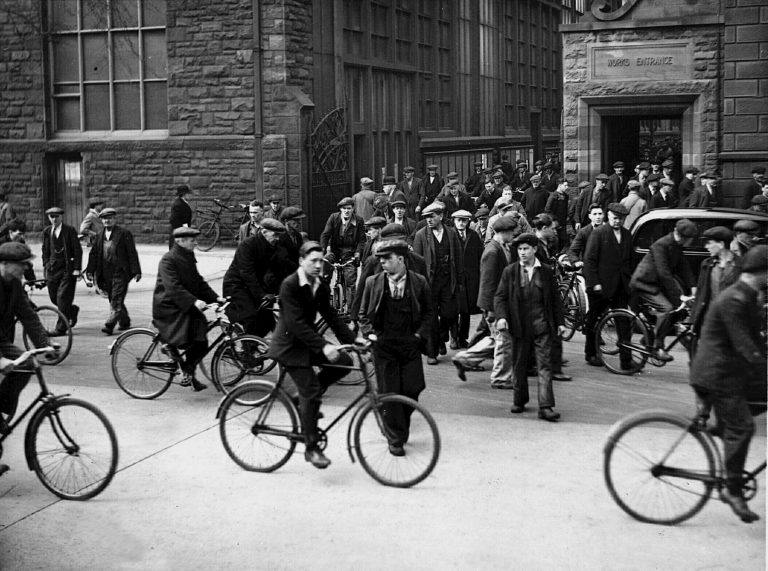
I am sure I am not alone amongst your readers in remembering the days when habitual and fluent swearing was a feature of the working day for many men, but outside of the factory gates was subject to a code of “no need for that – ladies present” or “mind your language in front of the children”. As children ourselves, we were taught never to say anything in public that you would not say to your mother in private and that swearing was neither grown-up nor funny nor clever. We can only assume that these lessons of working-class decorum were never passed on to the likes of Humza Yousaf, Lee Anderson or indeed Neil Mackay.

Those individuals should consider the example that they have set and indeed, I think in earlier age, Mr Yousaf’s position as First Minister would not have been tenable. And they should ponder on the example of Labour’s Wes Streeting in an earlier Edinburgh conversation. As reported in this paper, he “mocked the idea that he would ever tell Scottish Labour what to do, and if he tried that with Dame Jackie [Baillie] the second word would be ‘off’.”

The point was made with humour, articulacy and decency – qualities that are apparently absent from Messrs Yousaf and Anderson, and not valued by Mr Mackay.

Peter A Russell, Glasgow.

• OUR First Minister told us publicly that we should say “F*** off” to people who are bigoted against us.

How sad that our First Minister, who heads up our country, recommends that we use an unpleasant, nasty swear-word in response to others’ unpleasant remarks. What an extraordinary poor example for our nation … “When people are unkind, tell them to f*** off!”

Surely the very opposite should be taught … that we should react in kindness when people treat us badly … that certainly is Jesus’s teaching.

By all means, speak up for what is right, and speak against cruel, unpleasant language, but that should be done with courtesy and kindness … calming down the situation, not exacerbating it. This statement by our First Minister greatly saddens me. What kind of society is being fostered by his advice? In my view this is a highly inappropriate and disturbing example from Humza Yousaf. I believe he should, at the very least, publicly retract this statement.

Alasdair HB Fyfe, Carmunnock.

Read more: A tale of two ‘f**ks’: why Yousaf and Anderson’s swearing is different

Barking up the wrong trees

A 12% fall in the share value of abrdn (“Edinburgh investment giant sees £500m wiped from worth”, heraldscotland, August 9) comes as no surprise to those of us studying its antics in forestry investment.

Its purchase of the Far Ralia estate in the Cairngorms National Park is proving highly controversial as it struggles to justify a massive tree-planting programme in an area where the natural regeneration of existing woodland is the preferred solution. Its neighbouring landowner, the Danish businessman Anders Povlsen, has admirably demonstrated the value of natural regeneration as opposed to planting in this part of the Cairngorms. So it is astonishing that abrdn is insisting on a 20th century solution to a 21st century problem, sending in the diggers to upgrade the hill roads before churning up the peaty soils to make them ready for planting. The carbon released into the atmosphere by these unwise activities will take decades to be balanced by the carbon captured by the planted trees.

If this is the way that abrdn approaches the rest of its investments then we must fear for the health of its shareholders as well as the planet.

Dave Morris, Kinross.

Bus cuts are a disgrace

I FIND it a disgrace that bus companies are subsidised by public monies, yet are still allowed to cut vital services that, to them, are “not viable”. Imagine this being a pub landlord who runs a very busy pub which makes a fortune for six days of the week, and then, with begging bowl in hand, asks the Government to subsidise day seven because it’s “not viable”. That would never happen, but the analogy mirrors exactly how bus companies are allowed to operate.

People might say that bringing bus companies back under public regulation is the answer. That may be so. However, given the track record of the SNP, I don’t think that’s a viable option.

James Simpson, Erskine.

Wheel of good fortune

I WRITE on a day filled, for this Herald reader at least, with much joy.

In an overheating world, I find shelter and solace by heading for the this paper’s puzzle page and, in particular the Word Wheel.

Oh, the joy on the days when, the moment my eyes fall on the puzzle, the letters instantly, damn-near miraculously, reveal their nine-letter resolution.

The feeling of self-satisfaction is great, and others with whom I share this domicile remark on my day-long wan smile, and the fact that I am less crabbit than usual.

On the odd occasion when a nine-letter solution evades me, the day is filled not so much with gnashing of teeth, but with wringing of hands, certainly.

Cliff-hangers, like the one found in yesterday’s (August 9) edition, where the jumble provided “hovering'” but left a “t” hovering uselessly in mid-air, called for a coffee break and another crack at it later.

My berating the puzzle compiler for deciding that “maladroit” would suffice as an answer on an earlier occasion probably says a lot about character flaws on my part.

Today, I figured it out, exceeding the “21 Good” target, and all without a pause for coffee.

Did you guess?

Ian Sommerville, Largs.

Dear me

HAVING visited the grounds of Pollok House this week, I found that the minimum charge to park in the adjacent car park was £5.30. It brings a whole new meaning to the motto the dear green place.

Stuart Brennan, Glasgow.
MacNeil hints at SNP return under new leader as he confirms he will stand at election

MacNeil hints at SNP return under new leader as he confirms he will stand at election

Kathleen Nutt

Kathleen Nutt

MP Angus MacNeil has confirmed he will stand as a candidate at the next general election as he hinted of a possible return to the SNP under a new leader.

The long-serving MP was expelled by the SNP last night after 30 years as a member.

However, asked by The Herald this morning if he would stand as an independent or as a candidate for Alba, he hinted at the prospect of a return to the SNP under a new leader should the party be defeated at the upcoming Rutherglen and Hamilton West by-election.

“I will stand – who knows what will happen with the SNP…might be wisdom and a change after what will be a debacle in Rutherglen,” he told The Herald.

A by election is expected to be held in October in Rutherglen and Hamilton West where voters ousted former SNP MP Margaret Ferrier in a recall petition.

It will be Mr Yousaf’s first electoral test as SNP leader and his party is facing a challenge from Labour which has previously held the seat with many expecting the party to triumph again this autumn.

Should Mr MacNeil stand as an independent or for Alba, the move would put pressure on support for the SNP which is also facing a challenge from Labour in Na h-Eileanan an Iar )or the Western Isles) which he has represented since 2005.

READ MORE: SNP would risk Yousaf leadership by giving new vote on Greens deal

Labour has recently chosen its candidate Torcuil Crichton, a former Westminster editor for the Daily Record.

Mr MacNeil’s expulsion followed a clash with chief whip Brendan O’Hara and criticism of the party’s strategy on independence describing it as “utterly clueless”.

He was suspended from the party’s Westminster group last month after reportedly clashing with chief whip Brendan O’Hara.

The party’s conduct committee met on Thursday evening to discuss his case after he refused to immediately rejoin the group at the end of his suspension.

Mr MacNeil, 53, tweeted about his expulsion, using a kangaroo emoji to refer to the member conduct committee.

READ MORE: John Curtice: Humza Yousaf to blame for SNP’s slump in polls

He said: “The Summer of Member Expulsion, has indeed come to pass. As I have been expelled as a rank & file SNP member by a ‘member conduct committee’.

“I didn’t leave the SNP – the SNP have left me. I wish they were as bothered about independence as they are about me!”

He was suspended from the Westminster group for a week in early July following reports of a row with Mr O’Hara in the House of Commons.

Later that month his membership of the party was suspended as he refused to immediately rejoin the SNP group.

He released a statement attacking the SNP leadership’s approach to independence, accusing it of a lack of urgency.

“I will only seek the SNP whip again if it is clear that the SNP are pursuing independence,” he wrote.

READ MORE: Angus MacNeil expelled from SNP after row with chief whip

Thursday’s decision by the conduct committee means he cannot sit as an SNP MP any longer and appears to rule out any reconciliation with the party.

On Wednesday, SNP Westminster leader Stephen Flynn was asked about Mr MacNeil as he spoke to journalists on the by-election campaign trail in Rutherglen and Hamilton West.

He told the PA news agency the party’s MPs should not “pick and choose” when they hold the party whip.

However he said he would not give a “running commentary” on the conduct process and he “gets on well with Angus”.

Mr Flynn said he and his colleagues wanted a “positive outcome” but added this was not always possible in politics.

It is unclear yet whether or not the whip will be removed from another long serving parliamentarian.

SNP MSP Fergus Ewing is facing a sanction after he defied his party to vote for the sacking of Scottish Greens minister Lorna Slater in June.

It is understood a decision is to be made when Holyrood returns in September following its summer recess.

Asked by the BBC if he faced sanctions for voting to sack Ms Slater in the vote of no confidence, Mr Ewing said earlier this week that despite some of his colleagues saying he was “toast” he was still “waiting for that toasting.”

He added: “The future fate of Fergus Ewing is not what’s important. What’s important is the economy in Scotland, getting the basics right, competent government, replacing the greens, and getting rid of their madcap policies as quickly as possible.”